Projects - SEO Content Strategy
Payments Glossary: 100-Article
A 100-article content strategy built to do two things: earn placements in Google's AI Overviews and establish eBizCharge as a credible resource in the payments and accounting space. If Google consistently pulls from EBizCharge to answer industry questions, it signals to both the algorithm and the audience that the brand is a credible source in the space.
PROJECT DETAILS
CLIENT / SITE
EBizCharge
ROLE
Strategy, architecture, and execution
SKILLS
Keyword Research
Content Architecture
Schema Markup
EXECUTIVE SUMMARY

The Payments Glossary was a 100-article content strategy built to target definitional, zero-click queries in the payments and accounting space. The objective was to earn search impressions, build topical authority, and position EBizCharge as a trusted source.

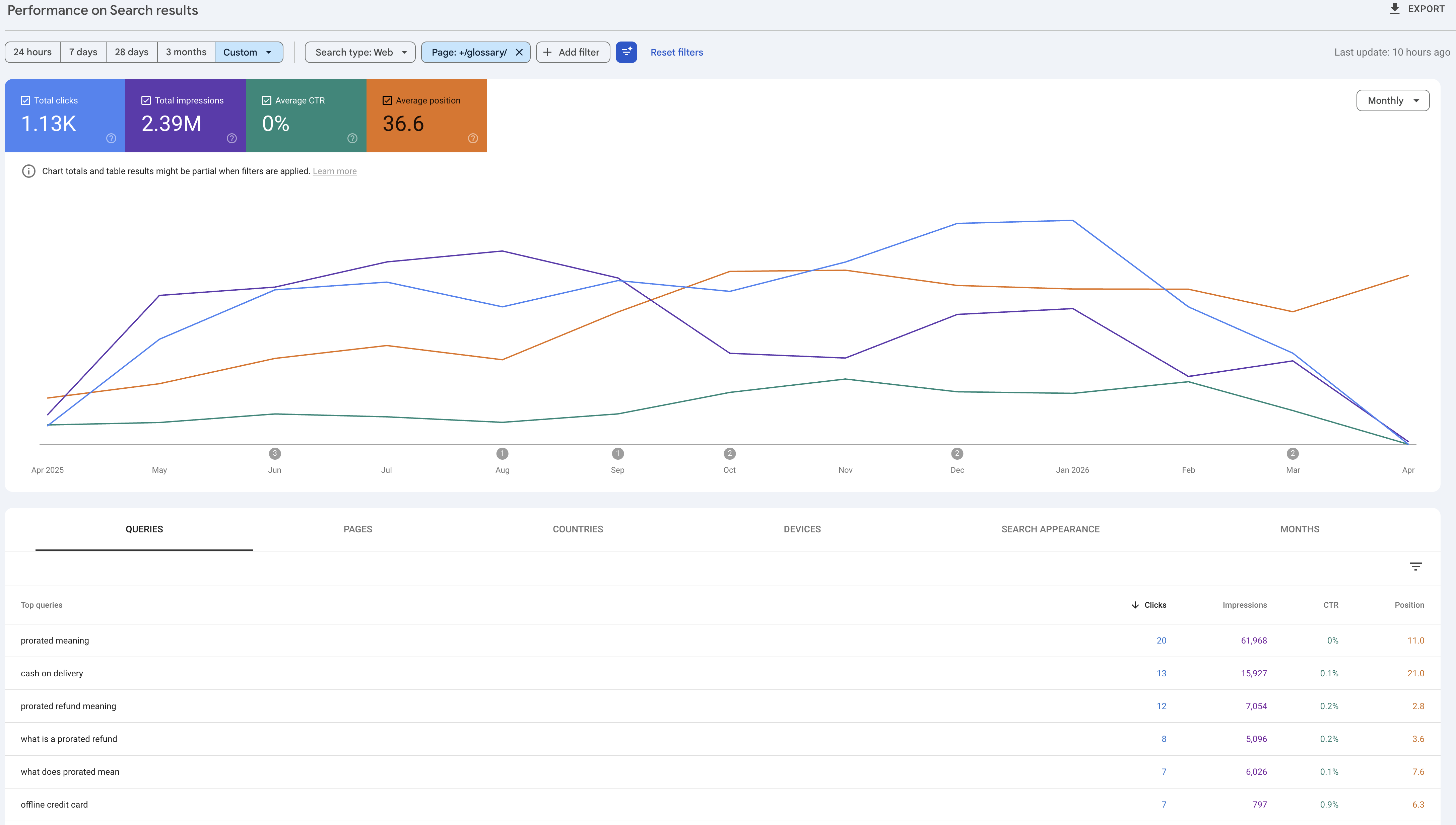
The program delivered 2.26 million impressions over 12 months at an average position of 36.9, demonstrating consistent indexing and ranking. Traffic peaked mid-2025 before declining following Google's August spam update and the continued expansion of AI Overviews. A low CTR was an anticipated outcome, as these queries were designed to be answered directly on the results page.

The measure of success was visibility, not traffic volume. The decline did surface a known vulnerability in top-of-funnel definitional content: exposure to algorithm changes and AI-driven answer displacement.

The strategic takeaway is straightforward. Glossary content requires a supporting content architecture, including second-tier articles, internal linking, and bottom-of-funnel assets that convert topical authority into product demand.

PERFORMANCE WINDOW
04/01/2025 - 04/01/2026
TOTAL CLICKS
1,130
Unique visits from search results
TOTAL IMPRESSIONS
2.26m
Times appeared in search across
PAGES PUBLISHED
100
Unique pages built and indexed
TOTAL SESSIONS
2,390
Total site visit count
PEAK MONTH CLICKS
145
Highest single month clicks
PEAK MONTH SESSIONS
477
Highest month site visit count
SCHEMA APPLIED
DefinedTermSet + DefinedTerm
Structured data type used

The Approach

Keyword research using Ahrefs came first. Identified 100 definitional, high-impression queries in the payments and accounting space with clear informational intent. Each article started with a focused outline, followed by an AI-assisted draft using Claude. These drafts were created with a standardized prompt built around the target keyword and content structure. Every draft then went through human edits for accuracy, tone, and readability before publishing.

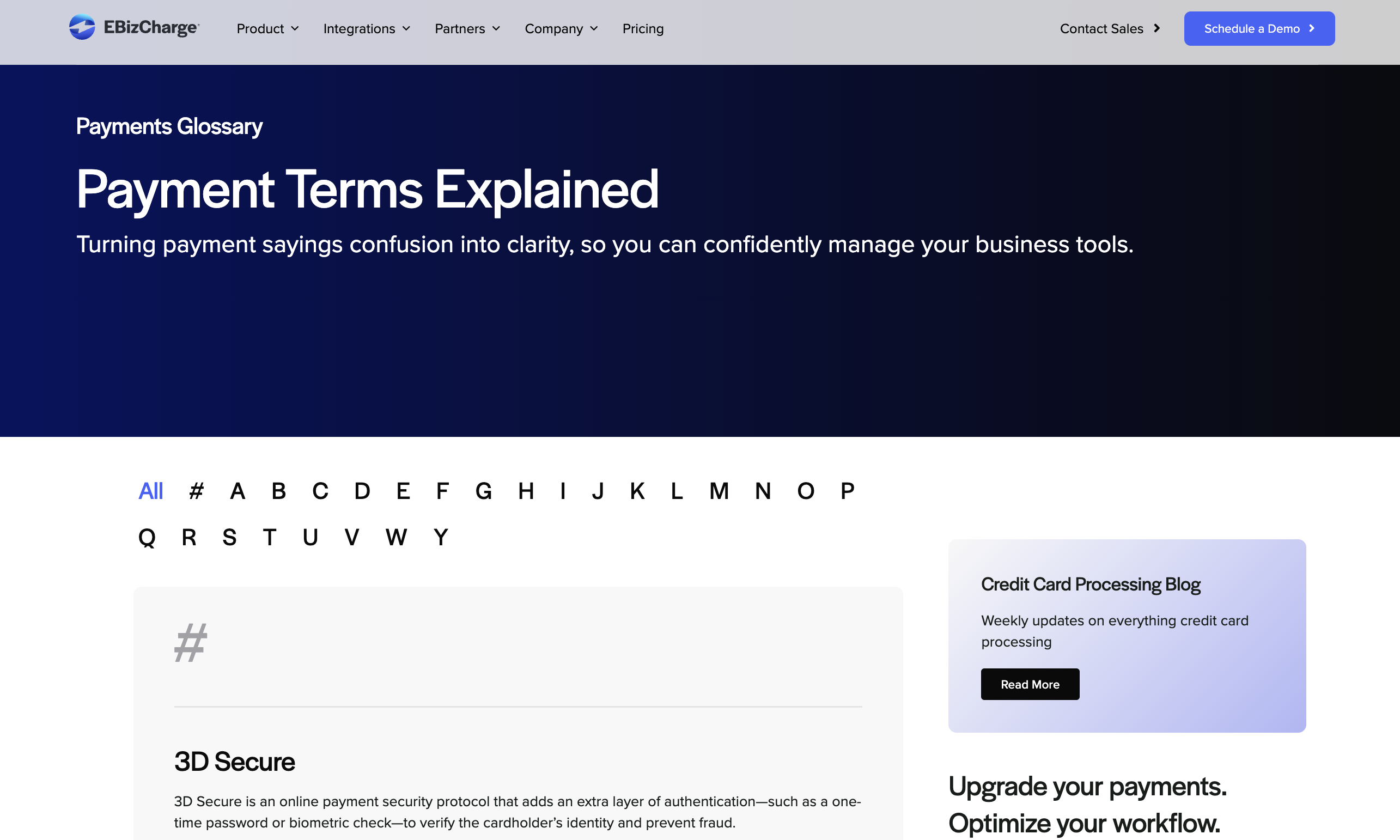
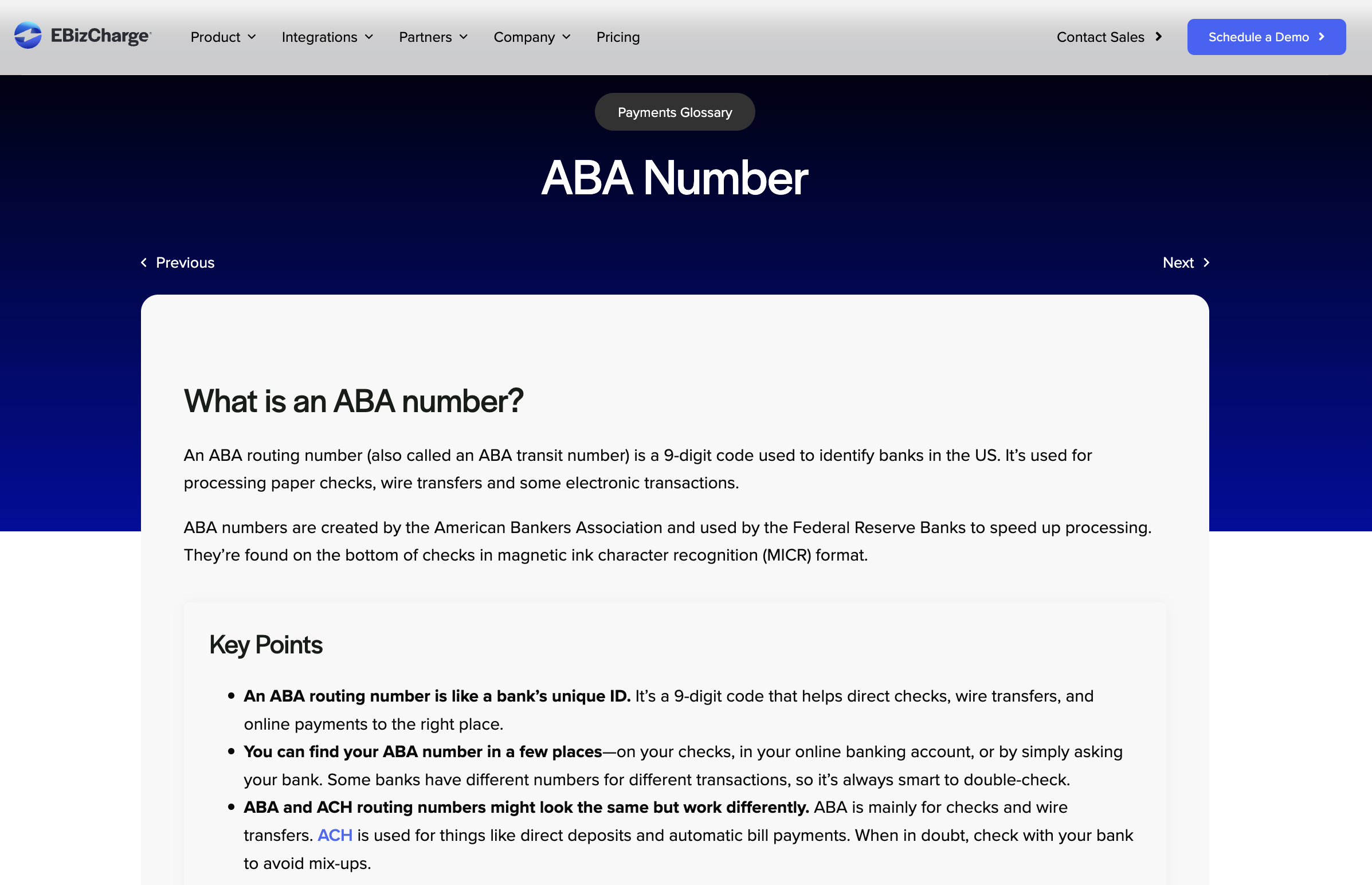
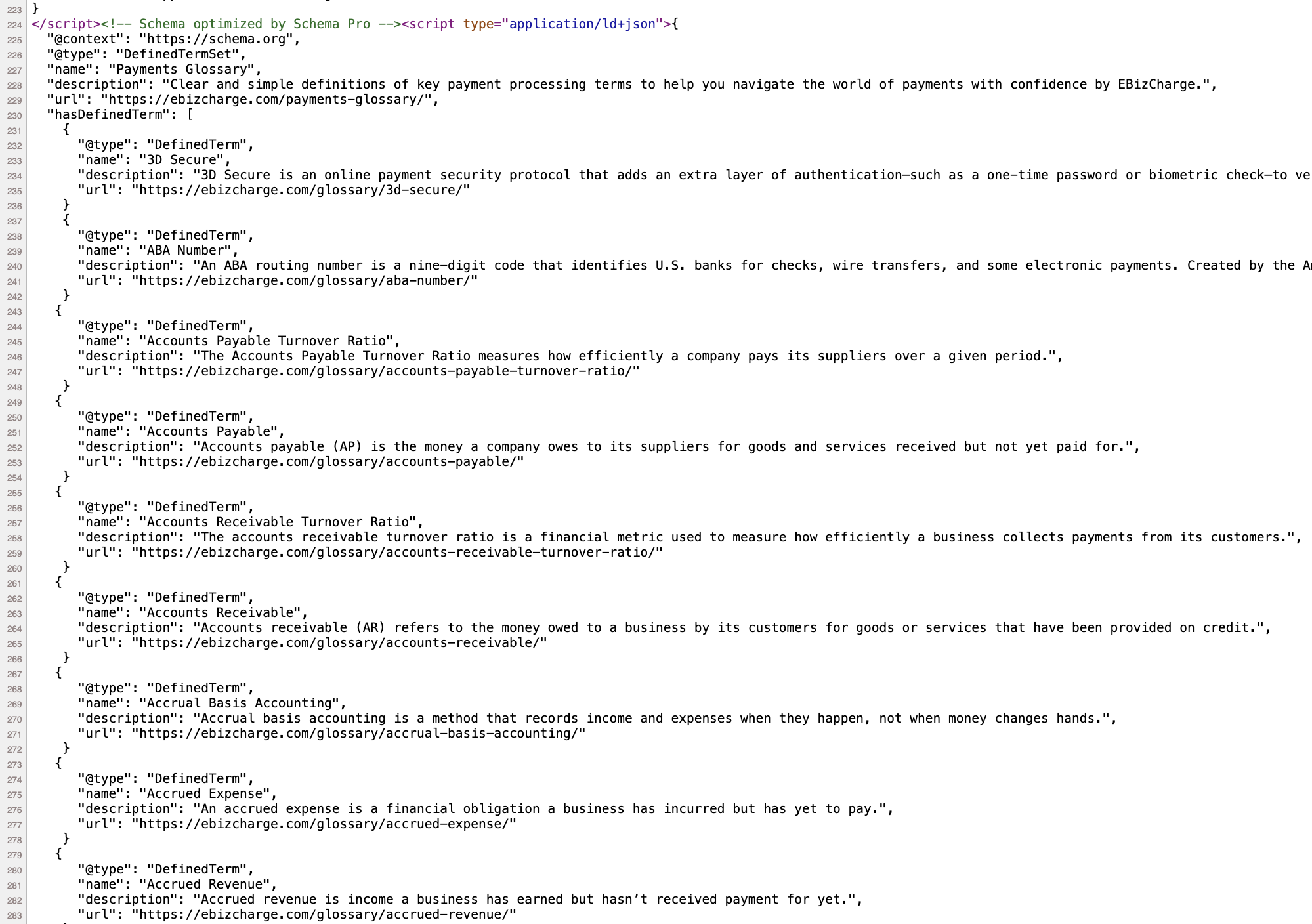
Articles were published in alphabetical batches and interlinked as they went live, building a connected content architecture. The glossary is structured with a parent page that has  DefinedTermSet schema and individual term pages using DefinedTerm schema to signal content type to search engines. Every page followed the same template: a key points section, H2 titles targeting keywords, consistent body structure, and sidebar calls to action.

The result was a uniform, crawlable content set that gave Google a clear picture of what the glossary covered and what EBizCharge stood for in the space. The entire strategy was researched, written, edited, and published over roughly two months, alongside other active projects.

Results and Learnings

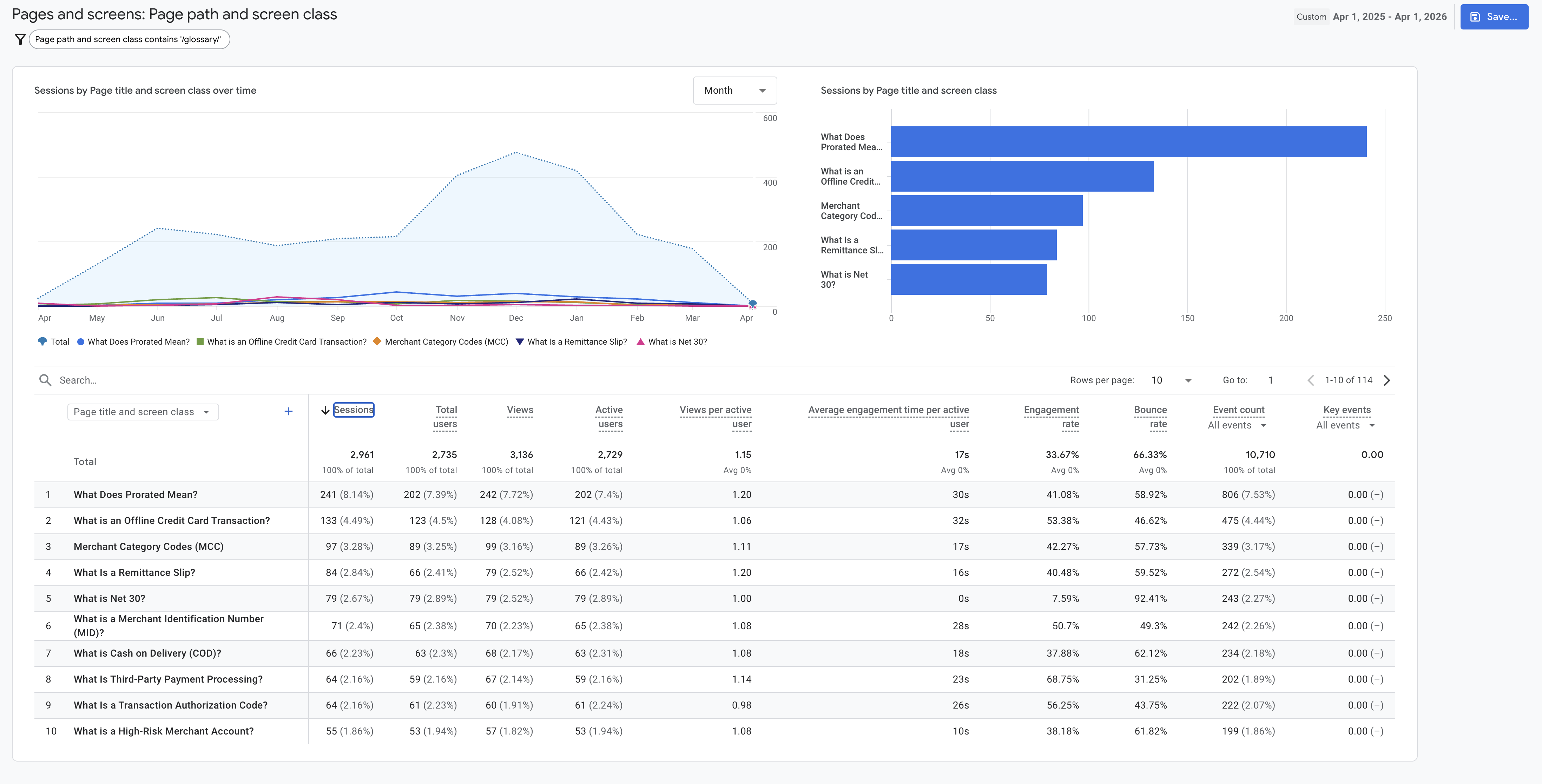
The glossary generated 2.39 million impressions and 1,130 clicks over a 12-month performance window, with an average position of 36.6 across the full article set. GA4 recorded 2,961 sessions from 2,735 total users during the same period. The low CTR reflects the nature of the top of funnel, zero click intent queries targeted.

The strategy achieved AI Overview placements, with EBizCharge surfacing as a cited source for terms like "cash on delivery," confirming that Google recognizes the site as a credible reference in this content category. Placement is not consistent across every term and every search.

Impressions peaked in August 2025 at 312,870 for the month before pulling back following Google's August spam update and the continued maturation of AI Overviews. Clicks actually peaked later, in January 2026 at 145, suggesting the content continued earning ranking positions even as impressions compressed. Both trends reflect the broader impact on top-of-funnel definitional content across the industry, not an isolated site issue.

We learned that a content glossary builds authority but requires a second layer of content to capture and convert. The next phase would include supporting cluster articles targeting higher-intent adjacent queries, a stronger internal linking strategy connecting glossary terms to product pages, and bottom-of-funnel content designed to move readers from awareness into consideration.